Book 8: The Trojans Press the Achaeans
Ἰλιάς · Book 8 · Classix Modern English Reading Edition
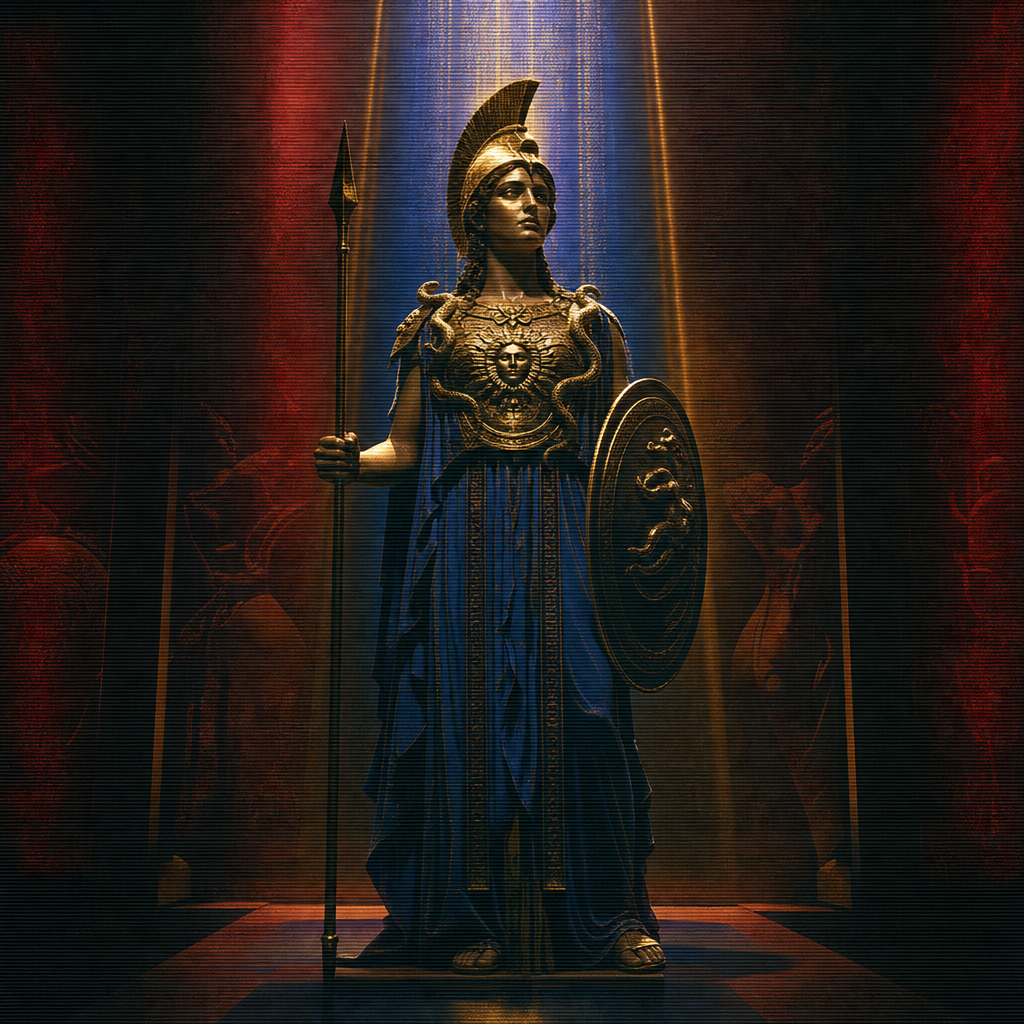
Dawn in her saffron robe was spreading across the whole earth when Zeus, who delights in thunder, called an assembly of the gods on the highest peak of many-ridged Olympus. He addressed them himself, and all the gods listened intently:
Read Ancient Greek Source (Iliad.8.1–Iliad.8.4)
"Hear me, all you gods and all you goddesses, so that I may say what the heart in my chest commands. Let no female god, then, and no male god try to thwart my word; instead, give your consent together, all of you, so that I can bring this work to pass at once. If I see any one of you slipping away from the other gods to go help either the Trojans or the Danaans, he will come back to Olympus beaten and in disgrace—or else I will seize him and hurl him into murky Tartarus, far down where the deepest abyss lies beneath the earth, where the gates are iron and the threshold bronze, as far below Hades as heaven is above the earth. Then he will know how far I surpass all the gods in strength.
Read Ancient Greek Source (Iliad.8.5–Iliad.8.17)
"Come then, gods, put it to the test, so that all of you may see. Hang a golden cord down from the sky, and lay hold of it, all you gods and all you goddesses; even if you strained with all your might, you could never drag Zeus, the highest counselor, down from heaven to the plain. But if I in turn chose to pull in earnest, I would haul you up along with the earth itself and the sea itself; then I would tie the cord around a peak of Olympus and leave the whole world hanging in midair. By so much do I surpass both gods and mortals."
Read Ancient Greek Source (Iliad.8.18–Iliad.8.27)
So he spoke, and all of them fell into stunned silence, awed by his words, for he had spoken with fierce authority. At last the bright-eyed goddess Athena spoke among them: "Father of us all, son of Cronus, highest of rulers, we too know well that your strength is unyielding. Even so, we grieve for the Danaan spearmen, who are filling out the measure of a bitter fate and perishing. Still, we will stay out of the fighting, just as you command; yet we will offer the Argives counsel that may help them, so that they are not all destroyed by your anger."
Read Ancient Greek Source (Iliad.8.28–Iliad.8.37)
Zeus the cloud-gatherer smiled at her and answered: "Take heart, Tritogeneia, dear child. I do not mean those words in full earnest, and I want to be gentle with you." With that he harnessed his two bronze-hoofed horses to his chariot—swift-flying coursers with manes of streaming gold. He clothed his own body in gold, grasped his finely wrought golden whip, stepped up into his chariot, and lashed them on. Willingly the pair flew midway between the earth and the starry sky, until he came to many-springed Ida, mother of wild beasts, to Gargarus, where his sacred precinct and fragrant altar stood. There the father of men and gods halted his horses, unhitched them from the chariot, and poured a thick mist over them; then he sat down among the mountain peaks, exulting in his glory, and looked out over the city of the Trojans and the ships of the Achaeans.
Read Ancient Greek Source (Iliad.8.38–Iliad.8.52)
Meanwhile the long-haired Achaeans took a hurried meal among their shelters and went straight from it to put on their armor. On the other side, throughout the city, the Trojans armed themselves—fewer in number, yet eager even so to fight in the press of battle out of hard necessity, for their children and their wives. All the gates were flung open, and the army surged out, foot soldiers and charioteers alike, raising a tremendous din. When they came together on a single field, they crashed oxhide shields against oxhide shields, spears against spears, and the fury of bronze-corseleted men against men; bossed shields struck one another, and a great roar went up. Then the groans and the boasts of men killing and being killed rose together, and the earth ran with blood.
Read Ancient Greek Source (Iliad.8.53–Iliad.8.65)
So long as it was morning and the sacred day was rising, missiles struck home on both sides and men kept falling. But when the sun stood at the middle of the sky, the Father held out his golden scales. In them he set two fates of long, grievous death—one for the horse-taming Trojans, one for the bronze-clad Achaeans—grasped the beam by the middle, and lifted it up. Down sank the appointed day of the Achaeans: the fates of the Achaeans settled upon the nourishing earth, while those of the Trojans rose high toward the broad sky. Then Zeus himself thundered terribly from Ida and hurled a blazing flash of lightning among the Achaean host; at the sight of it they were stunned, and pale terror took hold of them all.
Read Ancient Greek Source (Iliad.8.66–Iliad.8.77)
Then neither Idomeneus dared to stand his ground, nor Agamemnon, nor did the two Ajaxes stay, attendants of Ares. Only Nestor of Gerenia remained, the bulwark of the Achaeans—not at all by choice, for one of his horses was crippled: godlike Alexander, husband of lovely-haired Helen, had struck it with an arrow right on the crown of the head, where the first hairs of the mane grow from a horse's skull, the deadliest spot of all. Pierced to the brain, the horse reared up in agony and threw the rest of the team into confusion as it writhed around the bronze point. While the old man sprang forward with his sword to hack free the traces of the side-horse, Hector's swift team came charging through the rout, carrying their bold driver, Hector himself. Right there the old man would have lost his life, had Diomedes of the great war cry not been quick to see it. With a terrible shout he called out to rally Odysseus: "Zeus-born son of Laertes, resourceful Odysseus, where are you running with your back turned like a coward in the press? Watch out that no one plants a spear between your shoulders as you flee! Stand fast, so we can drive this fierce warrior off the old man!" So he shouted, but much-enduring, godlike Odysseus did not hear him, and raced past toward the hollow ships of the Achaeans.
Read Ancient Greek Source (Iliad.8.78–Iliad.8.98)
Even on his own, the son of Tydeus plunged into the front ranks, took his stand in front of the horses of Neleus' aged son, and spoke winged words to him: "Old sir, young fighters are pressing you hard; your strength is spent, heavy old age weighs upon you, your attendant is weak, and your horses are slow. Come, climb into my chariot, so you can see what the horses of Tros are like—how well they know how to race at top speed across the plain this way and that, in pursuit or in retreat, the pair I once took from Aeneas, masters of rout. Let our two attendants look after your team, while you and I drive these straight at the horse-taming Trojans, so that Hector too may learn whether my spear also rages in my hands." So he spoke, and Nestor, the horseman of Gerenia, did not refuse. Then their two attendants, strong Sthenelus and gallant Eurymedon, took charge of Nestor's mares, while the two heroes both stepped into Diomedes' chariot. Nestor took the glossy reins in his hands and lashed the horses, and quickly they closed on Hector.
Read Ancient Greek Source (Iliad.8.99–Iliad.8.117)
As Hector charged straight at them, the son of Tydeus cast his spear. He missed Hector himself, but struck his attendant and charioteer, Eniopeus, the son of high-spirited Thebaeus, right in the chest beside the nipple as he held the reins. Eniopeus pitched from the car, the swift-footed horses shied back, and right where he fell his life and strength left him. Terrible grief for his charioteer clouded Hector's mind; yet deeply as he mourned his comrade, he left him lying there and went in search of another bold driver. Nor did his team go long without a master: he quickly found daring Archeptolemus, son of Iphitus, had him climb up behind the swift-footed horses, and placed the reins in his hands.
Read Ancient Greek Source (Iliad.8.118–Iliad.8.129)
Then ruin would have fallen and deeds beyond remedy been done, and the Trojans would have been penned inside Ilion like lambs, had the father of men and gods not been quick to see it. Thundering dreadfully, he let fly a white-hot bolt of lightning and hurled it into the ground right in front of Diomedes' horses. A terrible flame of burning sulfur flared up, and the two frightened horses cowered low beneath the chariot. The glossy reins slipped from Nestor's hands; fear seized his heart, and he said to Diomedes: "Son of Tydeus, come, swing your solid-hoofed horses around in flight! Can you not see that strength from Zeus no longer goes with you? Right now Zeus, son of Cronus, is granting glory to that man for the day; another time he will give it to us as well, if he chooses. No man can bend the will of Zeus, not even the mightiest fighter, for he is far stronger."
Read Ancient Greek Source (Iliad.8.130–Iliad.8.144)
Diomedes of the great war cry answered him: "Yes, old sir, everything you say is true and fitting. Yet this bitter grief pierces my heart and spirit: someday Hector will stand before the Trojans and declare, 'The son of Tydeus fled before me all the way to his ships.' So he will boast—and on that day may the wide earth gape open for me!" Then Nestor, the horseman of Gerenia, replied: "Ah, son of battle-wise Tydeus, what a thing to say! Even if Hector does call you a coward and a weakling, the Trojans and Dardanians will never believe him, nor will the wives of the great-hearted Trojan shield-warriors whose vigorous husbands you have hurled into the dust."
Read Ancient Greek Source (Iliad.8.145–Iliad.8.156)
With those words he wheeled the solid-hoofed horses around in flight, back through the rout, while the Trojans and Hector poured a shower of groaning shafts after them with an immense roar. Great Hector of the glancing helmet shouted loud after him: "Son of Tydeus, above all others the fast-riding Danaans honored you with the best seat, choice cuts of meat, and brimming cups; now they will scorn you, for you have proved no better than a woman. Run along, you cowardly doll! You will never make me yield and scale our ramparts, nor carry off our women in your ships; before that happens, I will deal you your death." So he spoke, and the son of Tydeus was torn two ways, longing to wheel the horses around and fight him face to face. Three times he weighed it in his mind and heart, and three times from the hills of Ida wise Zeus thundered, giving the Trojans a sign that the turning tide of victory was theirs.
Read Ancient Greek Source (Iliad.8.157–Iliad.8.171)
Hector shouted at the top of his voice to urge the Trojans on: "Trojans, Lycians, and Dardanians who fight at close quarters, be men, my friends, and remember your furious valor! I know that the son of Cronus has gladly nodded his promise to me of victory and great glory, and ruin for the Danaans. Fools, to have built these walls—flimsy, worthless things that will never hold back our fury! Our horses will easily leap across the trench they dug. And once I reach their hollow ships, see that no one forgets destructive fire, so that I can set the ships ablaze and slaughter the Argives themselves beside the hulls, dazed in the smoke."
Read Ancient Greek Source (Iliad.8.172–Iliad.8.183)
With that he called out to his horses and said: "Xanthus, and you, Podargus, and Aethon, and noble Lampus, pay me back now for all the care that Andromache, daughter of great-hearted Eetion, lavished on you when she set honey-sweet wheat before you first and mixed wine for you to drink whenever your hearts desired—even before she served me, who am proud to be her vigorous husband! Press hard on their tracks and hurry, so that we may seize Nestor's shield, whose fame now reaches the sky—they say it is all gold, rods and shield alike—and strip from the shoulders of horse-taming Diomedes the finely wrought breastplate that Hephaestus labored to make. If we can take those two prizes, I expect we will force the Achaeans to board their swift ships this very night."
Read Ancient Greek Source (Iliad.8.184–Iliad.8.197)
So he boasted, and queenly Hera was filled with indignation. She shifted on her throne, making tall Olympus tremble, and spoke straight to the great god Poseidon: "Outrageous, Earthshaker of wide power! Does not even the heart in your chest ache for the dying Danaans? Yet they bring you rich and pleasing gifts to Helice and Aegae—so wish them victory! If only all of us who back the Danaans were willing to drive the Trojans off and hold far-thundering Zeus in check, he would sit there grieving all alone on Ida." Deeply troubled, the lord Earthshaker answered her: "Hera, reckless in speech, what a thing to say! I for one would never want the rest of us to fight Zeus, son of Cronus, for he is far stronger."
Read Ancient Greek Source (Iliad.8.198–Iliad.8.211)
So the two of them spoke with one another, while the whole space that the trench enclosed from the ships to the wall was crammed with horses and shield-bearing men penned in together; and the one penning them was Hector, son of Priam, a match for swift Ares, now that Zeus had granted him glory. And he would have burned the balanced ships with blazing fire, had queenly Hera not put it into Agamemnon's mind to hurry in person and swiftly rally the Achaeans. He went along the shelters and ships of the Achaeans holding a great purple cloak in his stout hand, and took his stand by Odysseus' huge-hulled black ship, which lay at the very center so a shout could carry both ways—both to the shelters of Ajax, son of Telamon, and to those of Achilles, who had hauled their balanced ships ashore at the farthest ends, trusting in their courage and the strength of their hands.
Read Ancient Greek Source (Iliad.8.212–Iliad.8.226)
He shouted piercingly, making his voice ring out to the Danaans: "Shame on you, Argives, base disgraces, splendid in looks alone! Where have our boasts gone, when we claimed to be the bravest—the empty boasts you made in assembly on Lemnos, eating abundant meat of straight-horned cattle and drinking bowls crowned to the brim with wine, saying that each man of you would stand in battle against a hundred or two hundred Trojans? Now we are no match even for one—for Hector, who will soon set our ships ablaze with roaring fire! Father Zeus, have you ever before struck any mighty king with such blinding ruin and stripped him of great glory? Yet I say I never once passed by a fair altar of yours in my many-benched ship on my ill-starred voyage here, but on every one I burned the fat and thigh-bones of cattle, eager to sack well-walled Troy. Still, Zeus, fulfill at least this one wish for me: allow our men themselves to escape with their lives, and do not let the Achaeans be crushed like this by the Trojans."
Read Ancient Greek Source (Iliad.8.227–Iliad.8.244)
So he spoke, and the Father pitied him as he wept, and nodded that his army should be saved and not perish. At once he sent an eagle, the surest omen among winged birds, holding in its talons a fawn, the young of a swift deer; and beside the fair altar of Zeus it dropped the fawn, right where the Achaeans used to sacrifice to Zeus, lord of all omens. When they saw that the bird had come from Zeus, they leaped all the more fiercely at the Trojans and renewed their battle-lust. Then no man among the Danaans, many though they were, could boast that he drove his swift horses ahead of Tydeus' son to charge out across the trench and fight face to face. First by far, Diomedes killed a helmeted warrior of the Trojans, Agelaus, son of Phradmon. The man had turned his horses to flee, and just as he wheeled around, Diomedes planted a spear in his back between the shoulders and drove it through his chest; he toppled from the chariot, and his armor clattered upon him. After Diomedes came the sons of Atreus, Agamemnon and Menelaus; behind them the two Ajaxes, clothed in furious valor; behind them Idomeneus and Idomeneus' comrade-in-arms Meriones, a match for the man-slaying war god Enyalius; and behind them Eurypylus, the splendid son of Euaemon.
Read Ancient Greek Source (Iliad.8.245–Iliad.8.265)
Teucer came ninth, stringing his reflex bow, and took his stand beneath the shield of Ajax, son of Telamon. Ajax would shift his shield aside so the hero could peer out and pick his mark; and once Teucer shot an arrow into the throng and struck a man, that warrior fell on the spot and lost his life, while Teucer ducked back again to Ajax like a child running behind his mother, and Ajax hid him behind his shining shield. Who then was the first of the Trojans killed by faultless Teucer? Orsilochus first, and Ormenus, and Ophelestes, Daetor and Chromius and godlike Lycophontes, and Amopaon, son of Polyaemon, and Melanippus—all of them, one after another, he brought down to the nourishing earth.
Read Ancient Greek Source (Iliad.8.266–Iliad.8.277)
Agamemnon, lord of men, rejoiced to see him mowing down the Trojan ranks with his strong bow. He came up beside him and said: "Teucer, dear friend, son of Telamon, captain of armies, keep shooting like this, so you may become a saving light to the Danaans and to your father Telamon, who raised you when you were little and cared for you in his own house, bastard though you were; lift him to high glory, far away though he is. And I will tell you this, and so it shall be fulfilled: if Zeus who bears the aegis and Athena grant that I sack the well-built citadel of Ilion, into your hands first after my own I will place a prize of honor—either a tripod, or two horses with their chariot, or a woman to go up into your bed and share it." Faultless Teucer answered him: "Most glorious son of Atreus, why urge me on when I am already doing my utmost? With all the strength in me I have not let up; ever since we pushed them back toward Ilion, I have been watching for men and cutting them down with my bow. Eight long-barbed arrows I have already let fly, and every one sank into the flesh of battle-swift young warriors—yet I cannot hit this rabid dog."
Read Ancient Greek Source (Iliad.8.278–Iliad.8.299)
He spoke, and sent another arrow flying from the string straight at Hector, eager to hit him. He missed his mark, but his arrow struck faultless Gorgythion, Priam's noble son, full in the chest. His mother was lovely Castianira, who had come from Aesyme to marry Priam and was like the goddesses in beauty. And as a poppy in a garden drops its head to one side, weighed down by its seed-pod and the rains of spring, so his head drooped to one side, heavy with its helmet. Teucer sent yet another arrow from the string straight at Hector, longing to hit him. Even then he missed, for Apollo turned the shaft aside; instead he struck Archeptolemus, Hector's bold new charioteer, right in the chest beside the nipple as he charged into battle. Archeptolemus pitched from the chariot, the swift-footed horses shied back, and right where he fell his life and strength left him. Terrible grief for his charioteer clouded Hector's mind; yet deeply as he mourned his comrade, he left him lying there and ordered his brother Cebriones, who was close at hand, to take the horses' reins; and Cebriones heard him and obeyed.
Read Ancient Greek Source (Iliad.8.300–Iliad.8.319)
Hector himself leaped to the ground from his gleaming chariot with a dreadful roar, seized a boulder in his hand, and went straight at Teucer, his heart set on striking him down. Teucer had just drawn a bitter arrow from his quiver and laid it on the string; but as Teucer pulled the cord back to his shoulder, eager to shoot him, Hector of the glancing helmet struck him with the jagged stone right where the collarbone parts the neck and chest, the most vulnerable spot of all. The stone snapped his bowstring, his hand went numb at the wrist, and he dropped to his knees as the bow fell from his grasp. Ajax did not neglect his fallen brother: he came running, stood over him, and covered him with his shield until two loyal comrades, Mecisteus, son of Echius, and noble Alastor, stooped beneath him and carried him, groaning heavily, back to the hollow ships.
Read Ancient Greek Source (Iliad.8.320–Iliad.8.334)
Once again the Olympian stirred fierce strength in the Trojans, and they drove the Achaeans straight back toward the deep trench, with Hector in the lead, exulting in his might. Just as a hound chasing a wild boar or a lion runs close behind on swift feet and snaps at its flanks and hindquarters, watching warily as it wheels about, so Hector pressed hard on the long-haired Achaeans, always cutting down the last man in line as they fled. When they had made their way back through the stakes and the trench in flight, and many had fallen at the hands of the Trojans, the Achaeans halted beside their ships and stood their ground, calling out to one another and lifting their hands to all the gods in loud prayer; meanwhile Hector wheeled his fine-maned horses back and forth, his eyes like the Gorgon's or man-slaughtering Ares'.
Read Ancient Greek Source (Iliad.8.335–Iliad.8.349)
Seeing them, the white-armed goddess Hera took pity and at once spoke winged words to Athena: "Outrageous, child of aegis-bearing Zeus! Shall the two of us no longer care for the dying Danaans, even at this last hour? Soon they will fill out the measure of a grim fate and be destroyed by the onslaught of a single man; he rages beyond endurance, Hector, son of Priam, and already he has done terrible harm."
Read Ancient Greek Source (Iliad.8.350–Iliad.8.356)
Then the bright-eyed goddess Athena answered her: "If only that man would lose his strength and his life, killed at the hands of the Argives in his own native land! But my father rages with an evil mind in his chest—ruthless, forever perverse, always thwarting my resolve. Nor does he remember at all how often I saved his son when he was worn down by the labors of Eurystheus. Heracles would weep aloud toward heaven, and Zeus would send me down from the sky to help him. If only I had known all this in my sharp mind when Eurystheus sent him down to Hades, warden of the strong gates, to bring up from Erebus the hound of hateful Hades—he would never have escaped the sheer streams of the Styx! But now Zeus hates me, and fulfills the plans of Thetis, who kissed his knees and took his chin in her hand, begging him to honor Achilles, sacker of cities. Yet the day will come when he calls me his dear bright-eyed girl again. Come now, harness the solid-hoofed horses for us while I enter the palace of aegis-bearing Zeus and arm myself for battle, so I may see whether Priam's son, Hector of the glancing helmet, will rejoice when the two of us appear along the lanes of war, or whether some Trojan too will glut the dogs and birds with his fat and flesh, fallen beside the ships of the Achaeans."
Read Ancient Greek Source (Iliad.8.357–Iliad.8.380)
So she spoke, and the white-armed goddess Hera did not refuse. Moving busily, Hera—the revered goddess, daughter of great Cronus—harnessed the horses with their golden frontlets. Meanwhile Athena, daughter of aegis-bearing Zeus, let her supple robe slip down upon her father's floor, the richly patterned robe that she herself had woven and worked with her hands; then she put on the tunic of cloud-gathering Zeus and armed herself in war gear for tearful battle. She stepped into the blazing chariot and grasped her spear—heavy, huge, and stout, with which she breaks the ranks of heroic men against whom she, daughter of a mighty father, is enraged. Swiftly Hera touched the horses with the whip; of their own accord the gates of heaven groaned open, the gates kept by the Seasons, to whom great heaven and Olympus are entrusted, both to roll back the dense cloud and to close it shut. Right through those gates they drove the goaded horses.
Read Ancient Greek Source (Iliad.8.381–Iliad.8.396)
When Father Zeus saw them from Ida, he was seized with terrible anger, and he sent golden-winged Iris to bear his message: "Go, swift Iris! Turn them back, and do not let them come face to face with me, for it will be no happy clash if we meet in war. I tell you this, and so it shall be fulfilled: I will cripple their swift horses beneath their chariot, hurl the two of them from the car, and smash their chariot to pieces; and not even in ten full circling years will they heal of the wounds my thunderbolt inflicts, so that the bright-eyed one may learn what it means to fight her own father. With Hera I am not so indignant or so angry, for she is always in the habit of thwarting whatever I say."
Read Ancient Greek Source (Iliad.8.397–Iliad.8.408)
So he spoke, and storm-footed Iris sped off to deliver the message. She raced from the mountains of Ida to high Olympus, met them at the outer gates of many-valed Olympus, halted them, and spoke the word of Zeus: "Where are you rushing? Why do your hearts rage within your chests? The son of Cronus does not allow you to aid the Argives. For thus the son of Cronus has threatened, and so he will fulfill it: he will cripple your swift horses beneath your chariot, hurl the two of you from the car, and smash the chariot to pieces; and not even in ten full circling years will you heal of the wounds his thunderbolt inflicts, so that you, bright-eyed one, may learn what it means to fight your own father. With Hera he is not so indignant or so angry, for she is always in the habit of thwarting whatever he says. But you are utterly reckless, you shameless dog, if you truly dare to raise your monstrous spear in the face of Zeus!"
Read Ancient Greek Source (Iliad.8.409–Iliad.8.424)
With those words swift-footed Iris departed, and Hera spoke to Athena: "Alas, child of aegis-bearing Zeus, I no longer say that the two of us should fight against Zeus for the sake of mortals. Among them, let one man die and another live, as it may fall out for each; and let him, keeping his own counsel in his heart, dispense judgment between Trojans and Danaans, as is fitting." Speaking thus, she turned back the solid-hoofed horses. For them the Seasons unyoked the fine-maned horses, tethered them at their ambrosial mangers, and leaned the chariot against the gleaming entry walls, while the two goddesses sat down on golden couches among the other gods, grieving in their hearts.
Read Ancient Greek Source (Iliad.8.425–Iliad.8.437)
Then Father Zeus drove his well-wheeled chariot and horses from Ida up to Olympus and came to the assembly seats of the gods. For him the renowned Earthshaker unharnessed the horses, set the chariot on its stand, and spread a linen cloth over it; then far-thundering Zeus himself sat down on his golden throne, and great Olympus shook beneath his feet. Only Athena and Hera sat apart from Zeus, neither speaking a word to him nor asking him anything. But he knew their thoughts in his heart and said: "Why are the two of you so downcast, Athena and Hera? Surely you have not worn yourselves out in battle where men win glory, destroying the Trojans against whom you nurse such bitter wrath! No matter what, such are my strength and my invincible hands that all the gods on Olympus could not turn me back. As for you two, trembling seized your shining limbs before you even saw the fighting and war's grim work. For I tell you this, and it would have been done: struck by my thunderbolt, never in your own chariot would you have come back to Olympus, where the immortals have their home."
Read Ancient Greek Source (Iliad.8.438–Iliad.8.456)
So he spoke, and Athena and Hera muttered through closed lips as they sat side by side, devising ruin for the Trojans. Athena stayed silent and said nothing, furious at Father Zeus as fierce anger gripped her; but Hera's chest could not contain her rage, and she spoke out: "Dread son of Cronus, what a thing to say! We too know well enough that your strength is no weak thing. Even so, we grieve for the Danaan spearmen, who are filling out the measure of a bitter fate and perishing. Still, we will stay out of the fighting, if you command it; yet we will offer the Argives counsel that may help them, so that they are not all destroyed by your anger."
Read Ancient Greek Source (Iliad.8.457–Iliad.8.468)
Cloud-gathering Zeus answered her: "At dawn, ox-eyed Queen Hera, if you care to watch, you will see the almighty son of Cronus destroying even more of the great army of Argive spearmen. For mighty Hector will not break off from battle until the swift-footed son of Peleus rises beside the ships, on that day when they fight at the sterns in the deadliest crush over fallen Patroclus. So it is decreed. As for you and your anger, I care nothing—not even if you go to the lowest bounds of earth and sea, where Iapetus and Cronus sit taking no pleasure in the rays of Hyperion the Sun or in the winds, with deep Tartarus all around them. Even if you wander all the way there, I care nothing for your fury, since there is nothing more shameless than you." So he spoke, and white-armed Hera answered him not a word.
Read Ancient Greek Source (Iliad.8.469–Iliad.8.484)
Then the bright light of the sun plunged into Ocean, drawing black night across the grain-giving earth. For the Trojans the daylight sank against their will, but to the Achaeans dark night came welcome and three times prayed for. Then glorious Hector called an assembly of the Trojans, leading them away from the ships beside the eddying river, to an open spot where the ground showed clear of corpses. Stepping down from their chariots to the ground, they listened to the speech of Hector, dear to Zeus. In his hand he held a spear eleven cubits long; before him gleamed the bronze spearhead, and a band of gold ran around its socket. Leaning on this spear, he spoke to the Trojans:
Read Ancient Greek Source (Iliad.8.485–Iliad.8.496)
"Hear me, Trojans, Dardanians, and allies! Just now I thought that after destroying the ships and all the Achaeans I would return to windy Ilion; but darkness came first, and that above all has saved the Argives and their ships along the breaking sea. So for now let us yield to black night and prepare our supper. Unharness your fine-maned horses from the chariots and throw down fodder beside them; bring cattle and fat sheep quickly from the city, fetch sweet wine and bread from your halls, and gather plenty of firewood besides, so that all night long until early-born Dawn we may burn many fires and send their glare up to the sky—lest somehow under cover of night the long-haired Achaeans launch out in flight across the broad back of the sea. They must not board their ships at ease, without a fight; no, let many a man among them nurse a wound even at home, struck by an arrow or a sharp spear as he leaps aboard his ship, so that others too may shudder to bring tearful war against the horse-taming Trojans. And let the heralds dear to Zeus proclaim throughout the city that boys in their first youth and old men with gray temples are to station themselves around the city on the god-built towers; and let the women, each in her own halls, kindle a great fire; and let a steady watch be kept, so no hidden enemy force slips into the city while the army is away.
Read Ancient Greek Source (Iliad.8.497–Iliad.8.522)
"Let it be so, great-hearted Trojans, just as I say. Let what I have said stand as sound counsel for tonight; at dawn I will speak further to the horse-taming Trojans. Praying to Zeus and the other gods, I trust that we will drive from here these fate-borne dogs, whom the fates of death carried here on their black ships. Through the night let us guard our camp, and early, at the first light of dawn, armed in our war gear, let us rouse sharp battle at the hollow ships. I shall see whether Tydeus' son, strong Diomedes, drives me back from the ships to the wall, or whether I cut him down with the bronze and carry off his bloody spoils. Tomorrow he will know his own worth, if he dares stand up to my oncoming spear. Rather, I think he will lie struck down among the foremost, with many of his comrades around him, as the sun rises tomorrow! Would that I were as surely immortal and ageless for all time, and honored just as Athena and Apollo are honored, as this day now brings disaster to the Argives."
Read Ancient Greek Source (Iliad.8.523–Iliad.8.541)
So Hector spoke, and the Trojans roared their acclaim. They loosed their sweating horses from under the yoke and tethered them with leather straps, each man beside his own chariot. Quickly they brought cattle and fat sheep out from the city, fetched sweet wine and bread from their halls, and gathered piles of firewood besides. They offered full, unblemished sacrifices to the immortals, and from the plain the winds carried the rich, sweet savor up into heaven; yet the blessed gods took no share of it, nor wished to, for sacred Ilion was utterly hateful to them, along with Priam and the people of Priam of the good ash spear.
Read Ancient Greek Source (Iliad.8.542–Iliad.8.552)
So with high hearts they sat all night long across the lanes of battle, and their many watchfires burned. Just as in the sky the stars around the radiant moon shine out clear when the high air is windless, and all the lookout peaks and sharp headlands and wooded glens stand revealed as the boundless upper air breaks open from heaven, and every star is seen, and the shepherd's heart rejoices—so many shone the watchfires of the Trojans burning in front of Ilion, midway between the ships and the streams of Xanthus. A thousand fires burned on the plain, and beside each one sat fifty men in the glow of the blazing fire, while the horses stood beside their chariots champing white barley and spelt, waiting for fair-throned Dawn.