Book 4: The Truce Broken and the First Clashes
Ἰλιάς · Book 4 · Classix Modern English Reading Edition
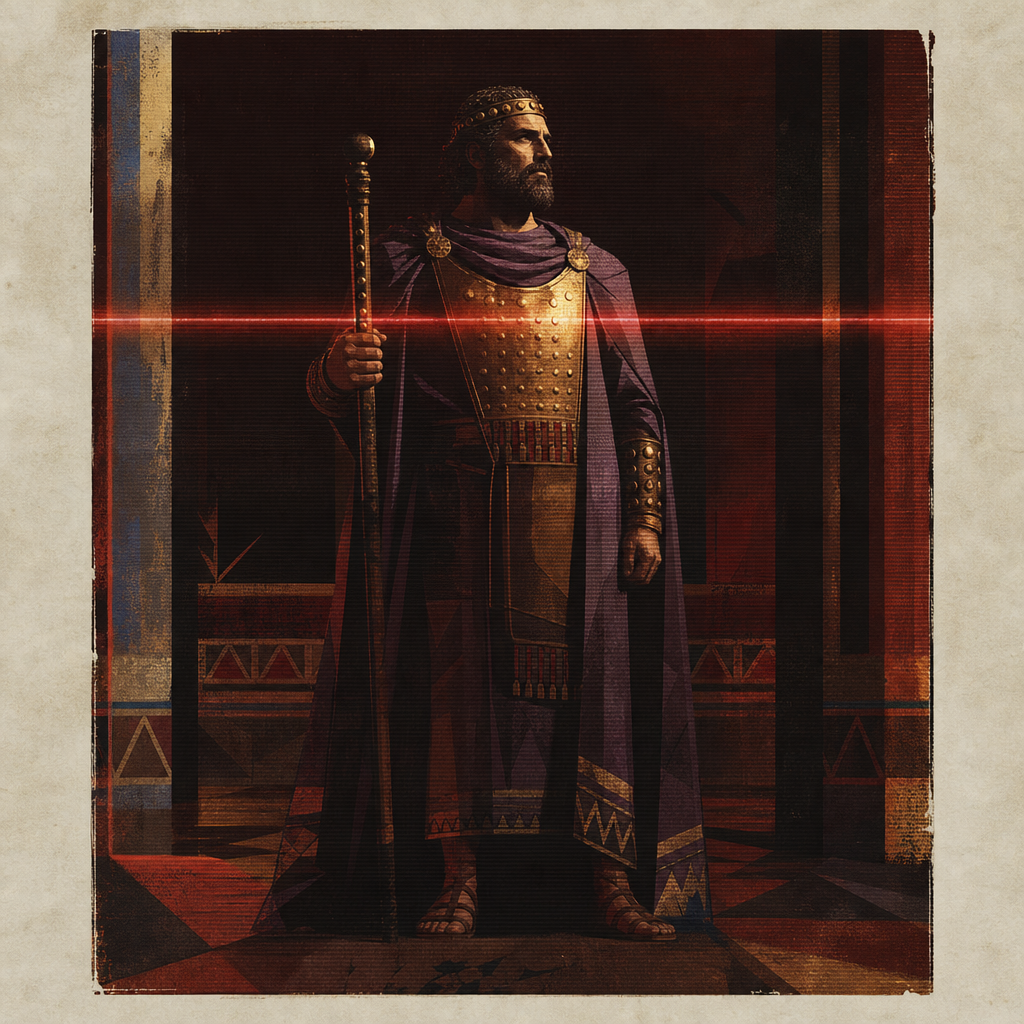
Meanwhile the gods sat beside Zeus in assembly on the golden floor. Among them Lady Hebe poured out nectar, and they lifted their golden cups to pledge one another as they looked down at the city of the Trojans. At once the son of Cronus set out to provoke Hera, speaking obliquely with stinging words:
Read Ancient Greek Source (Iliad.4.1–Iliad.4.6)
"Two goddesses stand as helpers to Menelaus—Argive Hera and Athena of Alalcomenae. Yet the two of them sit apart and take their pleasure in merely watching, while laughter-loving Aphrodite always stays beside the other man and wards off his fate. Even now she rescued him when he thought he was about to die. Still, the victory belongs to war-loving Menelaus. So let us consider how these matters shall go: whether we stir up bitter war and the dread din of battle once again, or establish friendship between both sides. If that course should prove welcome and pleasing to all, then King Priam's city might still stand inhabited, and Menelaus might lead Argive Helen back home."
Read Ancient Greek Source (Iliad.4.7–Iliad.4.19)
So he spoke, and Athena and Hera murmured through closed lips; they were sitting side by side, devising ruin for the Trojans. Athena kept silent and said nothing at all, seething at Father Zeus as fierce anger seized her. But Hera's chest could not contain her rage, and she burst out: "Most dread son of Cronus, what a thing you have said! How can you wish to make my labor vain and fruitless, and the sweat I poured out in toil when my two horses wore themselves out as I gathered the army to bring ruin on Priam and his sons? Do it, then—but the rest of us gods will not all approve."
Read Ancient Greek Source (Iliad.4.20–Iliad.4.29)
Heavily troubled, cloud-gathering Zeus answered her: "Strange queen, what great wrongs do Priam and Priam's sons do to you, that you rage without pause to sack the strong-built citadel of Ilion? If you were to pass inside the gates and the long walls and devour Priam raw, along with Priam's sons and the rest of the Trojans, then you might heal your anger. Do as you please; let this quarrel not become a great cause of strife between you and me hereafter. Yet I will tell you one thing more, and take it to heart: whenever I in my turn am eager to sack some city where men dear to you were born, do not try to hold back my anger, but let me have my way. For I too have yielded this to you willingly, though with an unwilling heart. Of all the cities of earthly men that stand inhabited beneath the sun and the starry sky, sacred Ilion was honored most in my heart, with Priam and the people of Priam of the good ash spear. Never did my altar lack a shared feast, or libation and the rising smoke of fat—for that is the privilege allotted to us."
Read Ancient Greek Source (Iliad.4.30–Iliad.4.49)
Then ox-eyed Lady Hera answered him: "Three cities are by far the dearest to me: Argos and Sparta and broad-streeted Mycenae. Destroy them whenever they become hateful to your heart; I will not stand in front of them to shield them or begrudge you. For even if I were jealous and tried to forbid their destruction, my jealousy would accomplish nothing, since you are far stronger. Yet my own labor too must not be left unfulfilled. For I also am a god, and my lineage comes from the same stock as yours; crooked-counseling Cronus fathered me highest in honor, both by birth and because I am called your consort, while you rule among all the immortals. Come then, let us yield to one another in these things—I to you, and you to me—and the rest of the immortal gods will follow. Now quickly command Athena to go down into the dread battle-din of Trojans and Achaeans, and contrive that the Trojans may be the first to do harm to the exultant Achaeans in violation of the oaths."
Read Ancient Greek Source (Iliad.4.50–Iliad.4.67)
So she spoke, and the father of men and gods did not refuse. At once he addressed Athena in winged words: "Go quickly to the armies, among the Trojans and Achaeans, and contrive that the Trojans may be the first to do harm to the exultant Achaeans in violation of the oaths." With these words he urged on Athena, who was already eager, and she darted down from the peaks of Olympus.
Read Ancient Greek Source (Iliad.4.68–Iliad.4.74)
Just as the son of crooked-counseling Cronus hurls a blazing star as a portent to sailors or to a wide host of warriors, and showers of sparks fly from it, so Pallas Athena streaked down to the earth and leaped into their midst. Wonder held all who saw—horse-taming Trojans and Achaeans in fine leg armor—and a man would look at his neighbor and say: "Surely bitter war and the dread din of battle will come upon us once again, or else Zeus is establishing friendship between both sides—Zeus, who is appointed steward of war among men." So one or another among the Achaeans and Trojans would speak.
Read Ancient Greek Source (Iliad.4.75–Iliad.4.85)
Meanwhile she plunged into the throng of Trojans in the likeness of a man, Laodocus, son of Antenor, a strong spearman, searching for godlike Pandarus if anywhere she might find him. She found the faultless and strong son of Lycaon standing in his place, surrounded by the strong ranks of shield-bearing warriors who had followed him from the streams of Aesepus. Standing close beside him, she spoke winged words: "Would you listen to me now, war-minded son of Lycaon? Dare to let fly a swift arrow at Menelaus, and you would win thanks and glory among all the Trojans, and most of all from Prince Alexander. From him first of all you would carry off splendid gifts, if he should see warlike Menelaus, the son of Atreus, brought down by your shaft and mounting the grievous funeral pyre. Come then, shoot your arrow at glorious Menelaus, and vow to Lycian-born Apollo, famed for his bow, that you will sacrifice a splendid hecatomb of firstborn lambs when you return home to the city of sacred Zeleia."
Read Ancient Greek Source (Iliad.4.86–Iliad.4.103)
So Athena spoke and swayed the fool's heart. At once he uncovered his polished bow, made from a leaping wild ibex that he himself had once struck beneath the breast: waiting in ambush as it stepped out from a crag, he had hit it full in the chest, and it fell backward onto the rock. From its head the horns had grown sixteen palms long; a horn-carving craftsman had worked them and fitted them together, and after smoothing the whole bow well, set on a tip of gold. Pandarus strung the bow and set it carefully down, leaning it against the ground, while his brave companions held their shields in front of him so the warlike sons of the Achaeans would not spring to their feet before Menelaus, the warlike son of Atreus, was struck. Then he took the lid from his quiver and drew out an arrow—feathered, never yet shot, a bearer of dark pains. Quickly he fitted the bitter arrow to the bowstring and vowed to Lycian-born Apollo, famed for his bow, that he would sacrifice a splendid hecatomb of firstborn lambs when he returned home to the city of sacred Zeleia. Gripping the notched shaft and the ox-sinew bowstring together, he drew them back, bringing the string to his chest and the iron arrowhead to the bow. When he had bent the great bow into a full circle, the bow twanged, the string sang out loud, and the sharp-pointed arrow leaped, eager to fly into the throng.
Read Ancient Greek Source (Iliad.4.104–Iliad.4.126)
Yet the blessed immortal gods did not forget you, Menelaus, and first among them was Zeus's daughter, driver of the spoil, who stood before you and warded off the piercing shaft. She brushed it just far enough from your flesh, as a mother brushes a fly from her child when he lies in sweet sleep, and she herself guided it to the spot where the golden clasps of the war-belt met and the corselet overlapped in a double layer. The bitter arrow struck the closely fitted war-belt; straight through the richly worked belt it drove, and forced its way through the finely crafted corselet and the waist-guard he wore to shield his flesh, a barrier against spears that protected him best of all; yet even through that it plunged onward. The arrow grazed the very surface of the warrior's skin, and at once dark blood streamed from the wound. As when a Maeonian or Carian woman stains ivory with crimson dye to make a cheek-piece for horses, and it lies in a chamber—many horsemen long to bear it, yet it is kept as a treasure for a king, both an ornament for the horse and a glory to its driver—just so, Menelaus, blood stained your shapely thighs and your calves and fine ankles below.
Read Ancient Greek Source (Iliad.4.127–Iliad.4.147)
Then Agamemnon, lord of men, shuddered when he saw the dark blood streaming down from the wound. War-loving Menelaus himself shuddered too; but when he saw that the sinew binding and the barbs were still outside his flesh, his spirit gathered back again within his chest. Groaning heavily, lord Agamemnon spoke among them, holding Menelaus by the hand while their companions groaned with him: "Dear brother, I swore those oaths with sacrifice only to bring you death—setting you forward alone before the Achaeans to fight the Trojans, since the Trojans have struck you down and trampled on the sworn oaths. Yet in no way will the oath be in vain, nor the blood of the lambs, the libations of unmixed wine, and the right hands we trusted. For even if the Olympian has not fulfilled it at once, he will fulfill it in the end, however late, and they will pay a heavy price—with their own heads, and their wives, and their children. For I know this well in my mind and in my heart: a day will come when sacred Ilion shall perish, and Priam, and the people of Priam of the good ash spear, and Zeus, son of Cronus, enthroned on high, dwelling in the upper air, will himself shake his dark aegis over them all, furious at this deceit. All this shall not go unfulfilled; yet I will bear a terrible grief for you, Menelaus, if you die and fill out the measure of your life's fate. In utter disgrace I would return to thirsty Argos, for the Achaeans will immediately think of their native land; and we would leave Argive Helen behind as a boast to Priam and the Trojans, while the earth will rot your bones as you lie in Troy with our task unfinished. And some one of the overbearing Trojans will say, leaping upon the burial mound of glorious Menelaus: 'May Agamemnon fulfill his wrath in every matter just like this, just as now he led an army of Achaeans here in vain, and has gone back home to his dear native land with empty ships, leaving noble Menelaus behind!' So someone will say one day; in that hour may the wide earth gape open for me."
Read Ancient Greek Source (Iliad.4.148–Iliad.4.182)
Reassuring him, fair-haired Menelaus replied: "Take heart, and do not alarm the Achaean army. The sharp arrow did not strike a mortal spot; before it could, my gleaming war-belt protected me, and underneath it my kilt and the waist-guard that bronzesmiths forged." Lord Agamemnon answered him: "May it truly be so, dear Menelaus! A healer shall probe the wound and lay upon it soothing remedies to stop the dark pains." He spoke, and called to Talthybius, his godlike herald: "Talthybius, go as fast as you can and summon Machaon here, the mortal son of Asclepius, the peerless healer, so that he may look to warlike Menelaus, the son of Atreus, whom some man skilled with the bow has shot with an arrow—some Trojan or Lycian, winning glory for himself and grief for us."
Read Ancient Greek Source (Iliad.4.183–Iliad.4.197)
So he spoke, and the herald heard him and did not disobey. He set off through the host of the bronze-armored Achaeans, scanning the ranks for the hero Machaon, and spotted him standing there, surrounded by the strong ranks of shield-bearing warriors who had followed him from horse-pasturing Tricca. Coming up close, he spoke winged words to him: "Rouse yourself, son of Asclepius! Lord Agamemnon summons you so that you may look to warlike Menelaus, leader of the Achaeans, whom some man skilled with the bow has shot with an arrow—some Trojan or Lycian, winning glory for himself and grief for us." So he spoke, and stirred the heart within Machaon's chest. They went on their way through the throng across the wide camp of the Achaeans. And when they reached the place where fair-haired Menelaus stood wounded, with all the chieftains gathered around him in a circle, the godlike man stepped into their midst and at once drew the arrow from the closely fitted war-belt; and as it was pulled out, its sharp barbs bent backward. He unfastened the gleaming war-belt, and underneath it the kilt and the waist-guard that bronzesmiths forged. Then, when he saw the wound where the bitter arrow had struck, he sucked out the blood and with practiced skill sprinkled soothing remedies over it, which Chiron in kindness had once given to his father.
Read Ancient Greek Source (Iliad.4.198–Iliad.4.219)
While they were tending Menelaus, good at the war-cry, the ranks of shield-bearing Trojans came advancing against them, and the Achaeans put on their armor once more and set their minds on battle. Then you would not have seen noble Agamemnon dozing, or cowering, or unwilling to fight, but hurrying eagerly into the battle where men win glory. He left his horses and his chariot inlaid with bronze; his attendant, Eurymedon, son of Ptolemaeus, Peiraeus's son, held the snorting team a short way off, under strict orders to keep them close at hand for whenever weariness seized Agamemnon's limbs as he gave commands through the host. Meanwhile, on foot, he ranged through the ranks of men. Whenever he saw any of the swift-horsed Danaans pressing forward, he stood beside them and heartened them with his words: "Argives, do not slacken one bit from your fierce strength! Father Zeus will never stand helper to liars. No, those who were first to do harm in violation of the oaths—vultures will eat their own tender flesh, while we will carry off their dear wives and young children in our ships, once we take their citadel."
Read Ancient Greek Source (Iliad.4.220–Iliad.4.239)
But whenever he saw men hanging back from hateful war, he rebuked them sharply with angry words: "Argives, braggarts and disgraces, have you no shame at all? Why do you stand there dazed like fawns that have run themselves exhausted across a wide plain and stop still, with no strength left in their hearts? Just so you stand there dazed and do not fight! Are you waiting for the Trojans to come close, right where our ships with their fine sterns are hauled up on the shore of the gray sea, to see whether the son of Cronus will hold his hand over you?" So he gave his commands and ranged through the ranks of men.
Read Ancient Greek Source (Iliad.4.240–Iliad.4.250)
Moving through the press of men, he came to the Cretans, who were arming around battle-minded Idomeneus: Idomeneus stood among the front fighters like a wild boar in his strength, while Meriones urged on the rearmost phalanxes for him. Seeing them, Agamemnon, lord of men, rejoiced, and at once he spoke to Idomeneus with warm words: "Idomeneus, I honor you above all the swift-horsed Danaans, both in war and in every other task, and at the feast, when the noblest of the Argives mix the elders' gleaming dark wine in the bowl. Even when the other long-haired Achaeans drink an allotted share, your cup always stands full, just like mine, to drink whenever the spirit prompts you. Now rouse yourself for war, and be the fighter you have always claimed to be." Then Idomeneus, leader of the Cretans, answered him: "Son of Atreus, I will surely be your loyal comrade, just as I first promised and pledged with my nod. Go urge on the other long-haired Achaeans, so that we may fight at once, since the Trojans have shattered the oaths. Death and sorrow will be theirs hereafter, because they were first to do harm in violation of the oaths." So he spoke, and the son of Atreus passed on, glad at heart.
Read Ancient Greek Source (Iliad.4.251–Iliad.4.272)
Moving through the press of men, he came to the two Ajaxes. Both were arming, and a cloud of foot soldiers followed with them. Just as a goatherd from a lookout point sees a cloud coming across the sea under the blast of the West Wind—to him, watching from afar, it looks blacker than pitch as it moves over the water, driving a heavy squall before it, and he shudders at the sight and drives his flock into a cave—so with the two Ajaxes the dense phalanxes of Zeus-nourished young fighters moved into destructive war, dark-massed, bristling with shields and spears. Lord Agamemnon rejoiced when he saw them, and he lifted his voice and spoke winged words to them: "You two Ajaxes, leaders of the bronze-armored Argives—to the two of you I give no orders, for it would not be fitting to urge you on; of your own accord you press your troops to fight with all their strength. Father Zeus, Athena, and Apollo, I wish such spirit stood in every man's chest! Then the city of Lord Priam would soon bow down, taken and sacked beneath our hands." With those words he left them there and went on after others.
Read Ancient Greek Source (Iliad.4.273–Iliad.4.292)
There he found Nestor, the clear-voiced speaker of the Pylians, arraying his companions and urging them to fight, around tall Pelagon, Alastor, and Chromius, Lord Haemon, and Bias, shepherd of the people. First he stationed the charioteers with their horses and chariots, and behind them he placed the foot soldiers, many and brave, to be a bulwark of battle; the cowards he drove into the middle, so that even an unwilling man would be forced to fight. First he gave orders to the charioteers, commanding them to rein in their horses and not get tangled in the crowd: "Let no man, trusting in his horsemanship and his courage, charge out alone ahead of the rest to fight the Trojans, nor fall behind, for that will make you easier to break. Whatever man from his own chariot comes within reach of an enemy chariot, let him lunge out with his spear, since that is a far better way. So too the men of old sacked cities and walls, keeping this mind and spirit in their chests." So the old man urged them on, long skilled in wars.
Read Ancient Greek Source (Iliad.4.293–Iliad.4.310)
Lord Agamemnon rejoiced when he saw him, and he lifted his voice and spoke winged words to him: "Old sir, I wish that just as the spirit stands in your own chest, your knees could keep pace and your strength were still unshaken! Instead, common old age wears you down. I wish some other man had it, and that you were numbered among the younger men." Then Nestor, the Gerenian horseman, answered him: "Son of Atreus, I myself would dearly wish to be as I was when I killed noble Ereuthalion. Yet the gods never give men everything at the same time: if I was a young man then, now old age attends me in turn. Even so, I will take my place among the charioteers and command them with counsel and words, for that is the privilege of old men. The younger men will wield the spears—men born later than I, who can trust in their strength." So he spoke, and the son of Atreus passed on, glad at heart.
Read Ancient Greek Source (Iliad.4.311–Iliad.4.326)
He found the son of Peteos, Menestheus, driver of horses, standing still, and around him were the Athenians, masters of the war-cry. Near him stood resourceful Odysseus, and around him the ranks of the Cephallenians, no weak fighters, stood waiting; for their troops had not yet heard the battle cry, since the phalanxes of the horse-taming Trojans and the Achaeans had only just stirred and begun to move, and so they stood waiting for another column of Achaeans to advance, charge the Trojans, and open the fighting. Seeing them, Agamemnon, lord of men, rebuked them, and lifting his voice, spoke winged words to them: "Son of Peteos, the king cherished by Zeus, and you, master of wicked tricks, greedy-minded man, why do you cower and stand back, waiting for others? It is fitting for the two of you to take your place among the front ranks and stand fast to meet the scorching battle; for you two are the very first to hear my call to the feast whenever we Achaeans prepare a banquet for the elders. There you are glad to eat roasted meat and drink cups of honey-sweet wine for as long as you wish; yet now you would gladly watch even if ten columns of Achaeans fought ahead of you with pitiless bronze."
Read Ancient Greek Source (Iliad.4.327–Iliad.4.348)
Glaring at him from beneath his brows, resourceful Odysseus answered: "Son of Atreus, what kind of word has slipped the barrier of your teeth? How can you say that we hang back from war whenever we Achaeans rouse sharp Ares against the horse-taming Trojans? You will see, if you wish and if you care at all for such things, the dear father of Telemachus plunging into the front fighters of the horse-taming Trojans. What you are saying is empty wind." With a smile, lord Agamemnon spoke to him when he saw that he was angry, and he took back his words: "Son of Laertes, sprung from Zeus, Odysseus of many devices, I neither rebuke you beyond measure nor order you about; for I know well that the heart within your own chest holds friendly counsel, since you think the very same thoughts as I do. Come then, we will make this good hereafter, if anything harsh has been spoken now, and may the gods let the winds carry it all away." Speaking so, he left them right there and went on to others.
Read Ancient Greek Source (Iliad.4.349–Iliad.4.364)
He found the son of Tydeus, high-hearted Diomedes, standing in his well-joined chariot behind his horses; and beside him stood Sthenelus, Capaneus's son. Seeing him too, lord Agamemnon rebuked him, and lifting his voice, spoke winged words to him: "Ah me, son of battle-minded, horse-taming Tydeus, why do you cower, why do you peer down the lanes of battle? It was never Tydeus's way to shrink back like this, but to fight the enemy far out in front of his dear companions—so said those who saw him toiling in battle; for I myself never met or saw him, yet men say he surpassed all others. Indeed, he came to Mycenae without war, as a guest alongside godlike Polynices, gathering an army; for at that time they were marching against the sacred walls of Thebes, and they earnestly begged our people to give them renowned allies. And the men of Mycenae were willing to give them and agreed to what they asked, but Zeus turned their minds by showing ominous signs. Then, after they had departed and were well along their way, and had reached the Asopus with its deep reeds and grassy meadows, there the Achaeans sent Tydeus ahead on an embassy. He went, and found many Cadmeans feasting in the halls of mighty Eteocles. There, though he was a stranger, horse-driving Tydeus felt no fear, alone as he was among so many Cadmeans; instead he challenged them to contests, and won every one with ease—such a helper was Athena to him. Angered, the Cadmeans, goaders of horses, led out fifty young warriors and set a dense ambush for him as he journeyed back; and there were two commanders—Maeon, son of Haemon, a man like the immortals, and Polyphontes, steadfast in war, the son of Autophonus. Yet on them too Tydeus brought a shameful doom: he killed them all, and sent only one man back to his home—he let Maeon go, obeying the portents of the gods. Such a man was Aetolian Tydeus; yet the son he fathered is worse than he in battle, though better in the assembly."
Read Ancient Greek Source (Iliad.4.365–Iliad.4.400)
So he spoke, and strong Diomedes said nothing at all to him, respecting the rebuke of the revered king. But the son of glorious Capaneus answered him: "Son of Atreus, do not lie when you know how to speak the clear truth. We boast that we are far better men than our fathers: we actually took the citadel of seven-gated Thebes, though we led a smaller army beneath a stronger wall, because we trusted the portents of the gods and the help of Zeus, whereas those men perished through their own reckless folly. So never place our fathers in the same honor as ours." Glaring at him from beneath his brows, strong Diomedes said: "Old friend, sit in silence and obey my word. I do not blame Agamemnon, shepherd of the people, for urging the Achaeans in fine leg armor into battle; for glory will attend him if the Achaeans cut down the Trojans and capture sacred Ilion, and his too will be the great grief if the Achaeans are cut down. Come then, let the two of us also turn our minds to furious valor." He spoke, and leaped in his armor from the chariot to the ground; and the bronze rang terribly on the lord's chest as he sprang forward—fear would have seized even a stout-hearted man.
Read Ancient Greek Source (Iliad.4.401–Iliad.4.421)
As when on a resounding shore waves of the sea rise one after another under the driving West Wind—first a wave rears its crest out on the open deep, and then, breaking upon the land, it roars aloud, and around the headlands arches and peaks high, spitting out the foam of the salt sea—so then, rank after rank, the phalanxes of the Danaans moved unceasingly into war. Each commander gave orders to his own men, while the rest marched in silence; you would never have thought that so great an army following behind had voices in their chests, fearing their leaders in silence, and on every man shone the richly worked armor in which they marched in ranks. But the Trojans were like ewes standing by the thousands in the courtyard of a man of many flocks while they are milked of their white milk, bleating without pause as they hear the cries of their lambs. So the clamor of the Trojans rose across their wide army; for they did not all have the same cry or a single speech, but their languages were mingled, and the men had been summoned from many lands. Ares urged on the Trojans, and bright-eyed Athena the Achaeans, along with Terror and Rout, and Strife raging without pause, the sister and companion of man-slaying Ares: at first she rears herself only a little, yet soon after she plants her head against the sky while she strides upon the earth. She it was who then cast shared conflict into the midst of them, striding through the throng and swelling the groaning of men.
Read Ancient Greek Source (Iliad.4.422–Iliad.4.445)
When the two armies advanced and met on a single field, they smashed oxhide shields together, and spears, and the fury of men in bronze corselets. Bossed shields struck against one another, and a huge din rose up. There the groans and the boasts of men rose together, of the killers and the dying, and the earth ran with blood. As two winter torrents rushing down from the mountains hurl their heavy waters together from great headwaters into a meeting of glens deep inside a hollow gorge, and far away in the hills a shepherd hears the roar—so from their clash came the shouting and the hard labor of battle.
Read Ancient Greek Source (Iliad.4.446–Iliad.4.456)
First Antilochus killed a Trojan warrior in full armor, a brave man in the front ranks, Echepolus, son of Thalysius. He was the first to strike him, on the ridge of his horsehair-crested helmet, driving the spear into his forehead, and the bronze point pierced right through the bone; darkness covered his eyes, and he toppled like a tower in the fierce fight. As he fell, lord Elephenor, Chalcodon's son and commander of the great-hearted Abantes, seized him by the feet and dragged him out from under the flying spears, eager to strip his armor quickly; yet his rush was short-lived. For great-hearted Agenor saw him hauling the corpse away, and where Elephenor's ribs showed bare past his shield as he stooped, stabbed him with a bronze-tipped shaft and unstrung his limbs. So his life left him, and over his body broke out a bitter struggle of Trojans and Achaeans; like wolves they leaped at one another, and man battered man.
Read Ancient Greek Source (Iliad.4.457–Iliad.4.472)
Then Telamonian Ajax struck Anthemion's son Simoeisius, an unmarried youth in his prime, whom his mother had borne beside the banks of the Simois as she came down from Mount Ida after following her parents there to tend their flocks. That was why they called him Simoeisius; yet he did not repay his dear parents for rearing him, and his life was cut short, brought down beneath the spear of great-hearted Ajax. As the youth came forward first, Ajax struck him in the chest beside the right nipple, and the bronze spear drove straight through his shoulder. He fell to the ground in the dust like a black poplar that has grown in the watered meadow of a great marsh, smooth-trunked, with branches sprouting only at the very crown, which a chariot-maker fells with gleaming iron to bend a wheel-rim for a handsome chariot, and it lies seasoning beside the banks of a river. Such was Anthemion's son Simoeisius, whom Zeus-born Ajax killed. Then Antiphus of the flashing corselet, son of Priam, cast his sharp spear at Ajax through the crowd. He missed Ajax, but hit Leucus, Odysseus's brave companion, in the groin as he was dragging the body to the other side; Leucus collapsed over it, and the corpse slipped from his hand. Fierce anger seized Odysseus's heart over his slain companion. He strode through the front ranks helmeted in gleaming bronze, halted close to the line, and hurled his bright spear after glancing sharply around him; and the Trojans shrank back as the man threw. He did not cast his shaft in vain, but struck Democoon, Priam's bastard son, who had come to his father from Abydos, from his swift mares. Enraged for his comrade, Odysseus struck him with the spear in the temple, and the bronze point drove clean through the other temple; darkness covered his eyes, he fell with a thud, and his armor clattered upon him.
Read Ancient Greek Source (Iliad.4.473–Iliad.4.504)
Then the Trojan front ranks gave ground, and glorious Hector with them. The Argives raised a great shout, dragged away the dead, and surged much farther forward. But Apollo was angered as he looked down from Pergamus, and he shouted out to the Trojans: "Rouse yourselves, horse-taming Trojans! Do not give way in battle to the Argives—their skin is not stone or iron to withstand flesh-cutting bronze when they are struck! Nor is Achilles, son of lovely-haired Thetis, fighting; he is nursing his heart-stinging wrath beside the ships." So spoke the dread god from the citadel; meanwhile Zeus's most glorious daughter, Tritogeneia, urged on the Achaeans, moving through the throng wherever she saw men hanging back.
Read Ancient Greek Source (Iliad.4.505–Iliad.4.516)
Then fate shackled Diores, son of Amarynceus. He was struck by a jagged boulder beside the ankle on his right shin; the man who threw it was the Thracians' leader, Peiros, son of Imbrasus, who had come from Aenus. The pitiless stone crushed both tendons and the bones utterly. Diores fell backward in the dust, stretching both hands out to his dear companions and gasping out his life. Peiros, the very man who had struck him, ran up and stabbed him with a spear beside the navel; all his bowels spilled out onto the ground, and darkness covered his eyes. As Peiros sprang back, Thoas the Aetolian hit him with a spear in the chest above the nipple, and the bronze fixed in his lung. Thoas closed in on him, wrenched the heavy spear from his chest, and drawing his sharp sword slashed him across the middle of the belly and took his life. Yet he could not strip the armor, for Peiros's companions stood around him—Thracians with hair knotted on their crowns, gripping long spears in their hands—and though Thoas was huge, mighty, and proud, they shoved him back from them, and he gave ground, staggering under their push. So Peiros and Diores lay stretched side by side in the dust, one the leader of the Thracians, the other of the bronze-armored Epeians; and around them many other men were being killed as well. Then no man who entered that field could have faulted the fighting, even if he moved through the thick of it still unhit by a cast and unstabbed by sharp bronze, with Pallas Athena leading him by the hand and turning aside the rush of flying weapons; for on that day many Trojans and Achaeans lay stretched face down in the dust beside one another.